How I Turned My Home Office Into a Nursery (Without Going Overboard) Part 1
If you've ever stared down a room that needs to become something completely different, you know the feeling: equal parts excitement and paralysis. That's exactly where I found myself when I started planning the transformation of my third-floor home office into a nursery for our soon-to-be-born son.
As a professional organizer based in Seattle, I've helped dozens of clients reimagine their spaces. But doing it in your own home — for a person who doesn't exist yet outside your body — is a different kind of design challenge.
Here's how I approached it, step by step.
The Backstory: A House in Transition
Our townhouse has been in a slow, intentional evolution over the past year. First came transforming our guest room into my new home office (Part 1, Part 2, Part 3). Then a kitchen refresh (Part 1, Part 2). And now, the final piece of the puzzle: my old sunny, third-floor office is becoming the nursery.
Each of these changes has been part of the same long game — making our relatively small Seattle townhouse work beautifully for the life we're actually living, not the life we used to have.
Step 1: Brain Dump What the Space Needs to Do
Before I looked at a single product listing or Pinterest board, I sat down and listed what this room actually needed to accomplish. This is a step I do with every client, and it's just as important when you're doing it for yourself.
For a nursery, this is trickier than it sounds. The Baby Internet will happily convince you that you need approximately 4,000 things and 2,000 bins to put them in. I went in with a clear intention: we are not going overboard.
Our approach from the start: acquire less, borrow when we can, choose versatile pieces, and let the room evolve as he does — rather than trying to solve for every phase of childhood all at once.
With that filter in place, here's what I identified as non-negotiable:
A safe, comfortable sleep setup that can adapt as he grows
Feeding and changing stations that keep essentials close without creating chaos
Thoughtful storage — with clear limits on what qualifies as an "essential"
A space that feels calm and considered: not overstimulating, not cluttered, but also not sterile or cold
Aesthetics we actually love — colorful and child-like, but still consistent with the rest of our home
A dedicated corner for my husband's work travel gear (as a pilot, having his go-bag and essentials laid out and ready matters)
That last one is a good reminder: a nursery doesn't exist in a vacuum. It has to work for the whole household.
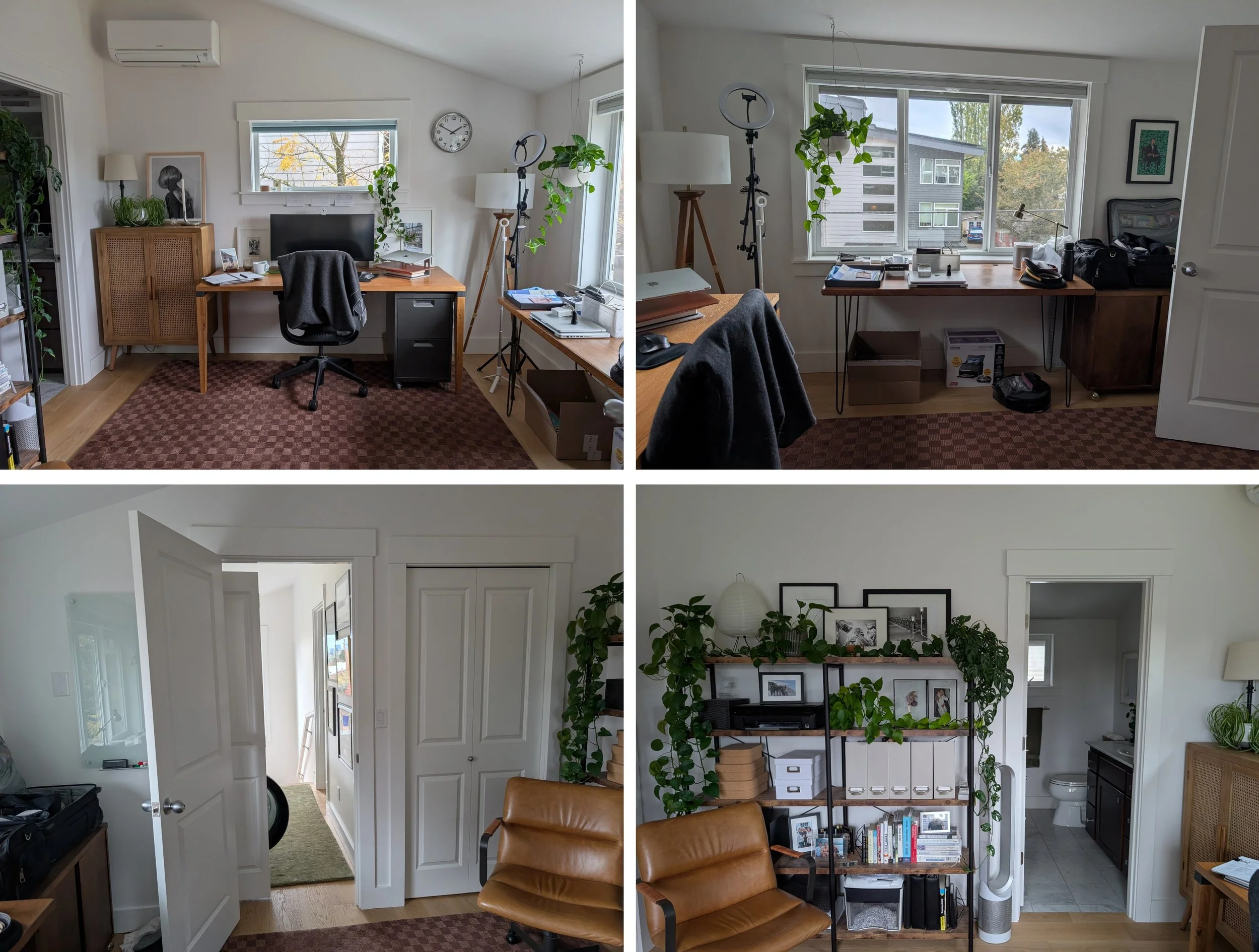
BEFORE: My previous office setup in this room
Step 2: Collect Inspiration Photos
Same process I use for every room redesign — Pinterest, Instagram, a Milanote board.
What kept drawing me in:
Rich colors: blues, greens, terracotta, burgundy
Large format and layered art
Warm mid-tone woods and painted furniture
Fun area rugs
A little whimsy in shapes — like a mobile
Soft lighting from multiple sources
Convertible cribs
Rooms that looked like they could grow with a child, not be torn out and replaced in a year
The north star: a room that feels like a calm, nurturing, loving place — somewhere both we and the baby genuinely want to spend time.
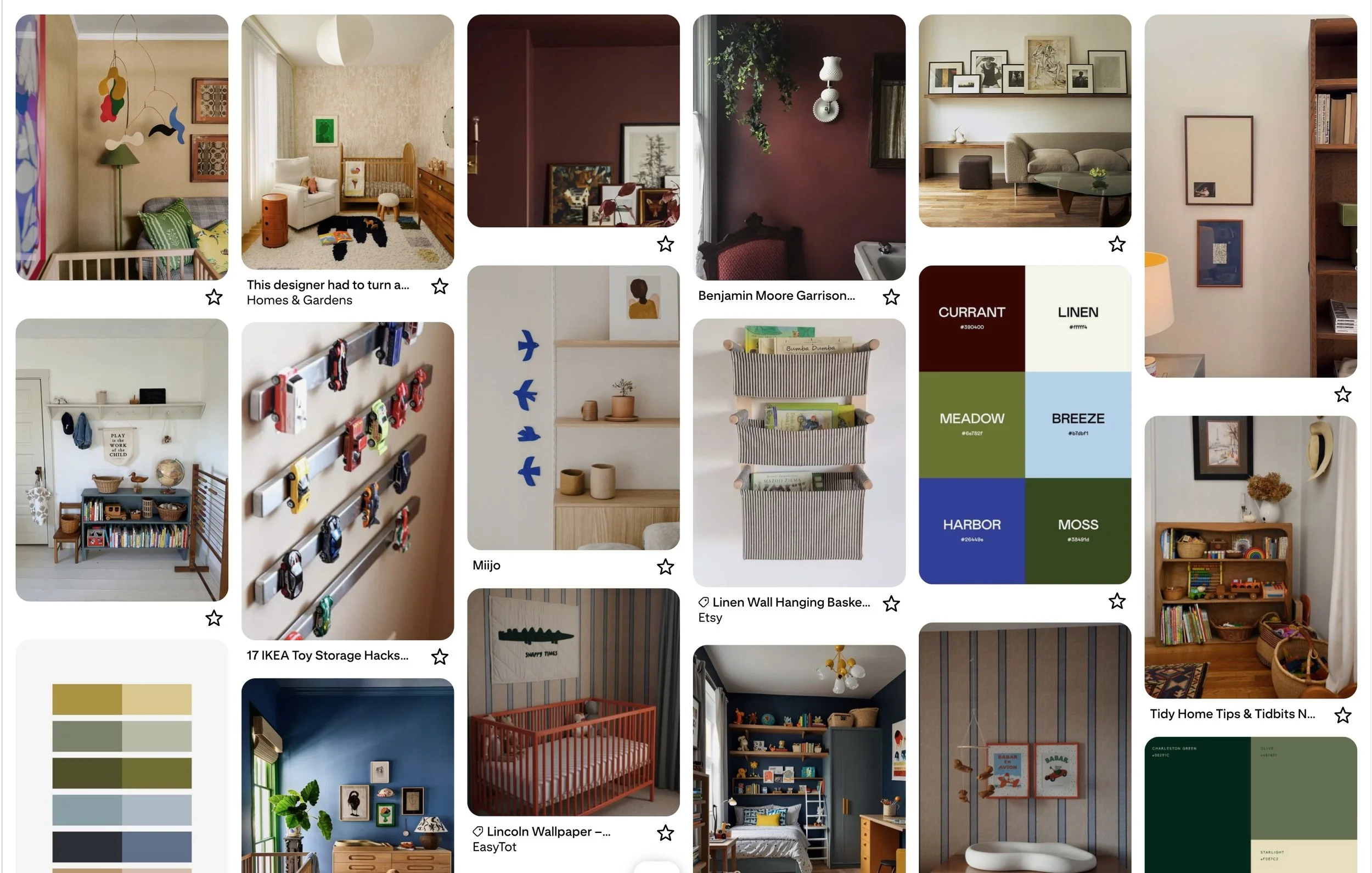
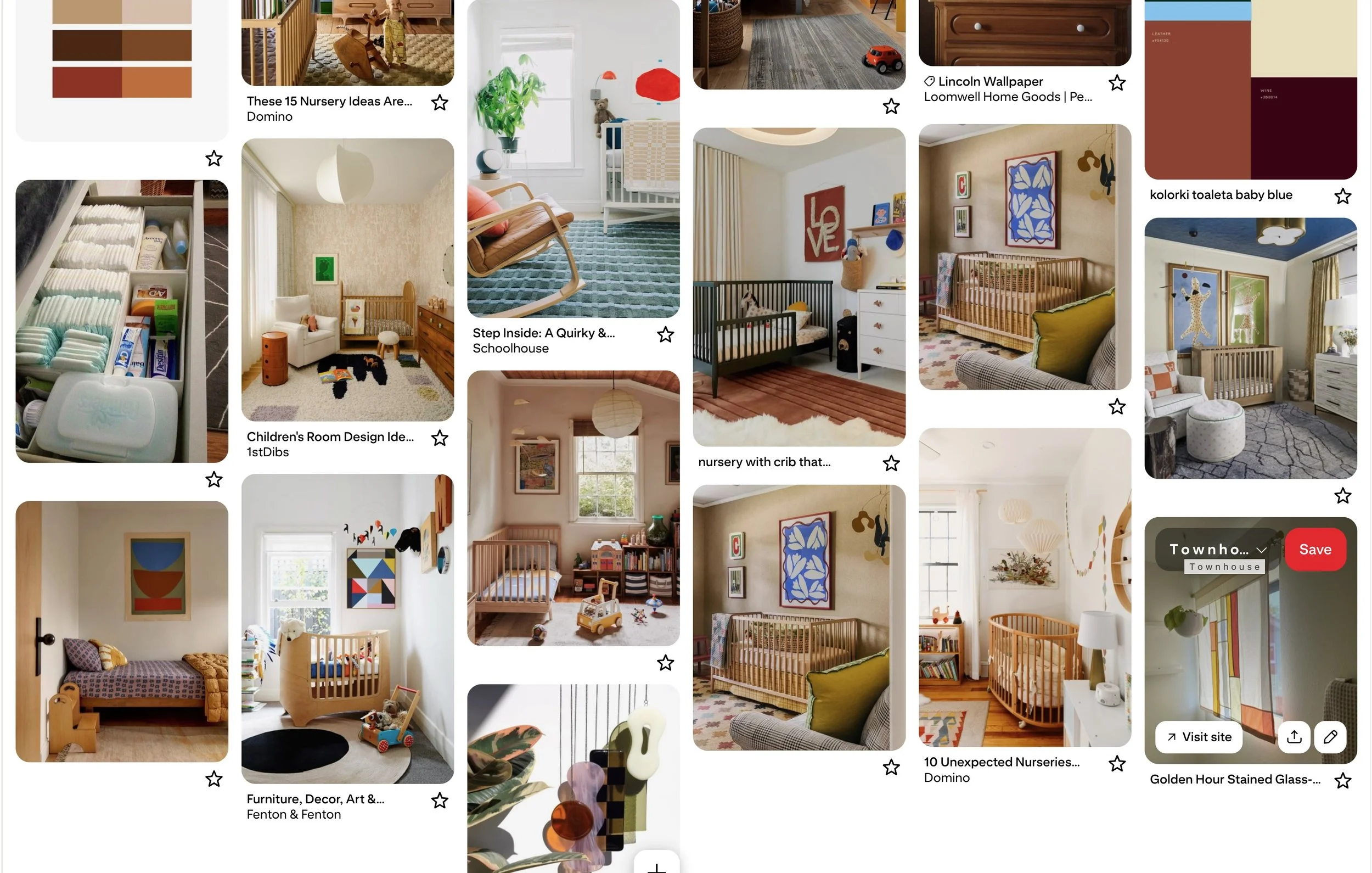
My nursery inspiration board
The Organizing Philosophy Behind It All
Here's something I think about a lot, both in my own home and with clients: we so often design for the exception instead of the everyday.
With baby gear especially, it's easy to acquire things for every possible scenario — the "just in case," the "we might need this eventually," the generous gifts that come in without a plan for where they'll live or what happens when they're outgrown.
Our approach has been different. We're one-and-done, which means everything that comes into this room has a planned exit: donated, gifted, or passed along the moment it's outgrown. We're not storing for a future sibling. When he's done with it, someone else's child gets it.
This isn't deprivation. It's clarity. And it makes the room — and our home — feel so much more intentional.
Want to be the first to see the reveal and hear more tips like this?
Sign up for my newsletter where I share real-life organizing projects, gentle mindset shifts, and tools I swear by.
