Kitchen Remodel Reveal: The Small Design Decisions That Made a Big Difference
This is Part 2 of the mini-series on our kitchen renovation. If you missed Part 1 (what our kitchen looked like before), you can check it out here.
After lots of planning, tweaking, second-guessing, and a whole lot of measuring… our kitchen remodel is officially done (!!)
And it feels so good.
Not just because I like looking at it, but because every inch was designed around how we actually live.
Why This Kitchen Remodel Works (Beyond Just Looks)
The magic of this kitchen isn’t just in the finishes or layout.
It’s in the small, sometimes tedious decisions that make daily life easier.
When you’re planning a kitchen remodel, it’s easy to focus on aesthetics—but function is what you feel every single day.
Here are a few of the decisions that made the biggest difference for us:
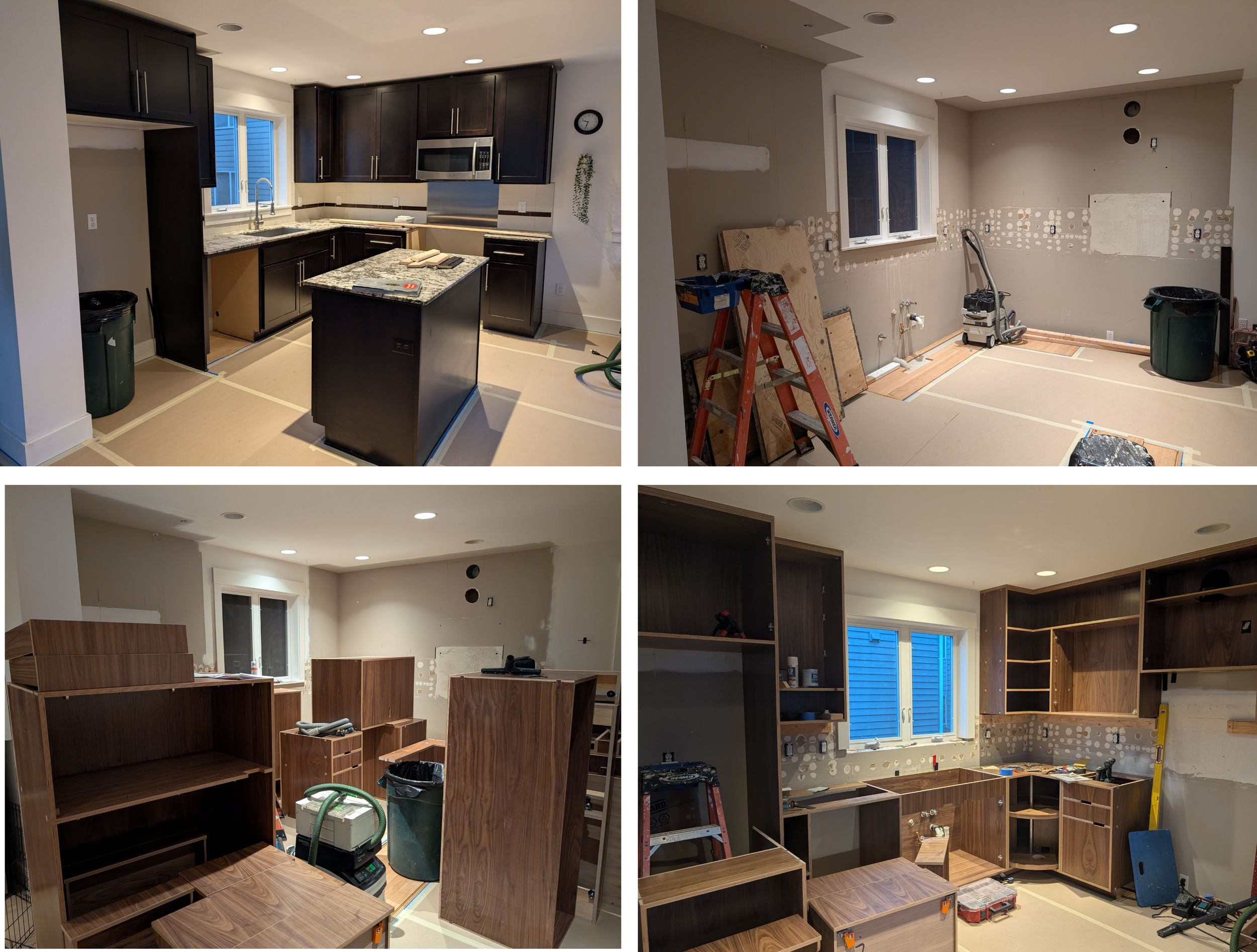
During construction…
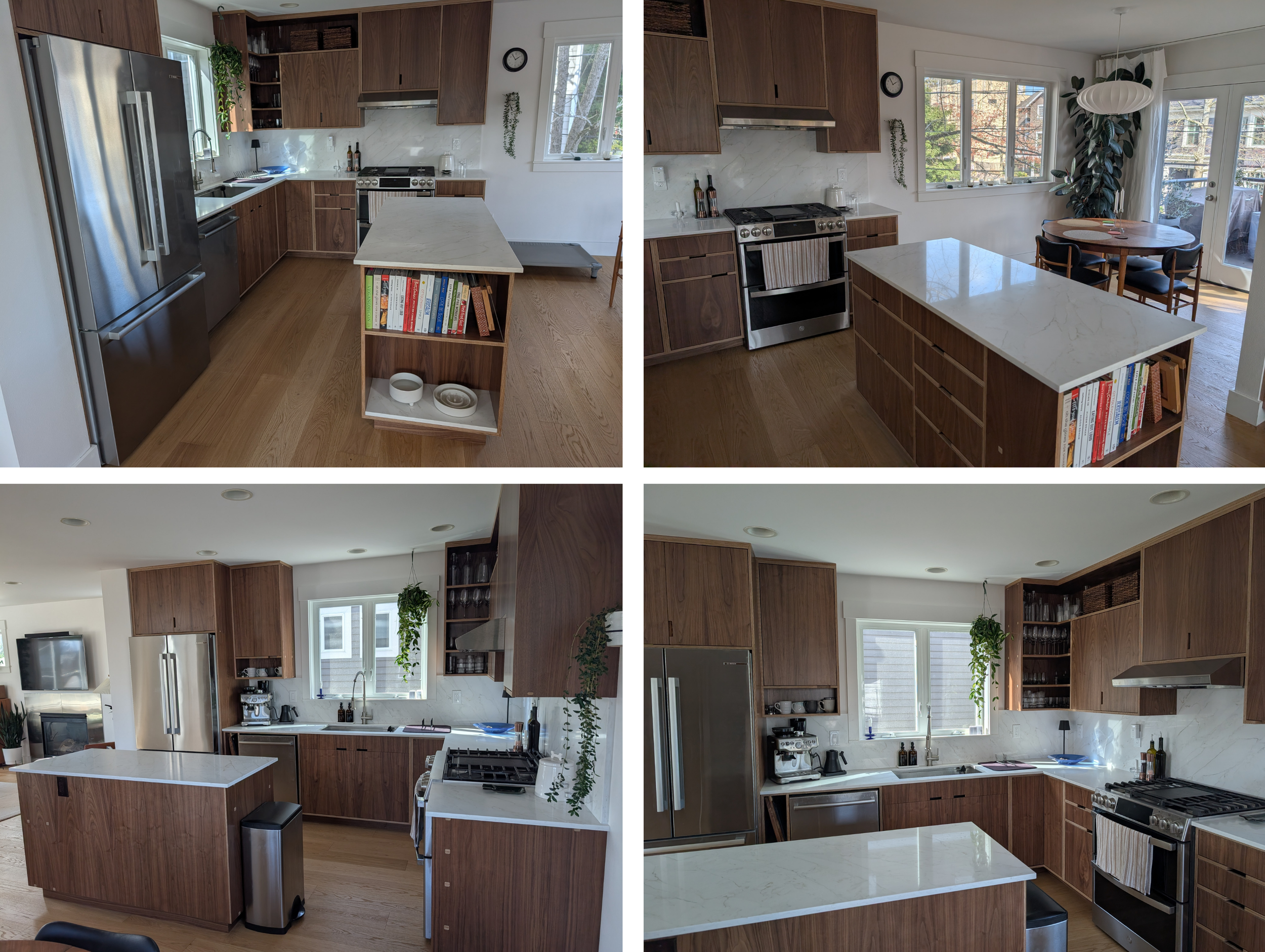
After!
1. Measuring What You Actually Own (Not Guessing)
While designing our cabinets, we didn’t assume things would fit—we checked.
How tall are our wine glasses?
What about vases?
Do everyday glasses really need that much vertical space?
How high can we comfortably reach without a step stool?
Those few extra inches of wasted vertical space on each shelf can add up quickly.
Designing around real items—not hypothetical ones—helped us maximize every cabinet.
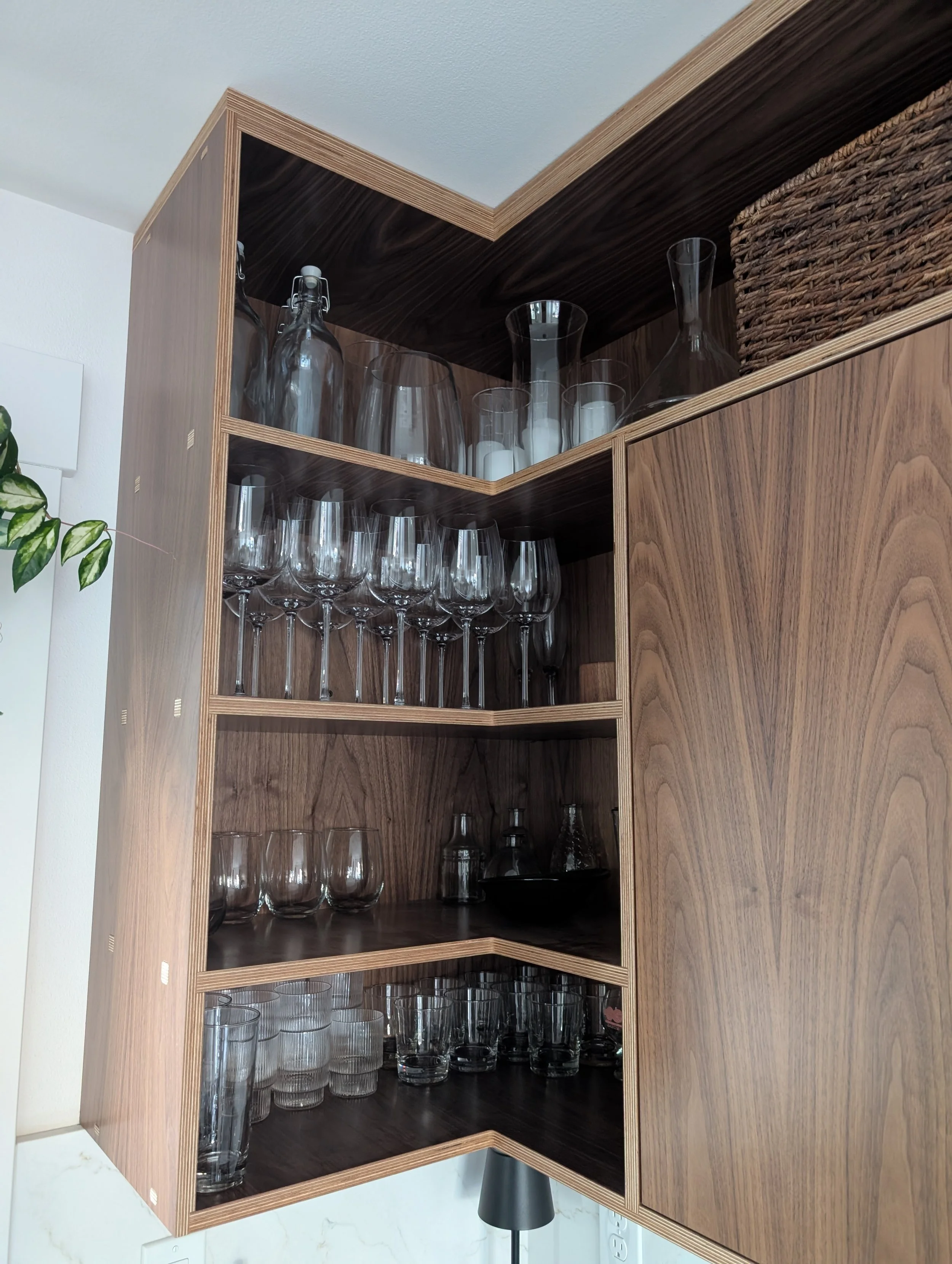
AFTER: Glassware shelves
2. Rethinking Default Cabinet Dimensions
Right before finalizing our plans, I caught something important:
The default vertical sheet pan cabinet was nearly twice as tall as it needed to be.
So we adjusted it—and gained enough space to add an entirely new drawer above it.
A whole drawer… from one small rethink.
This is a great reminder: default cabinet specs aren’t always the most functional. It’s worth questioning them.
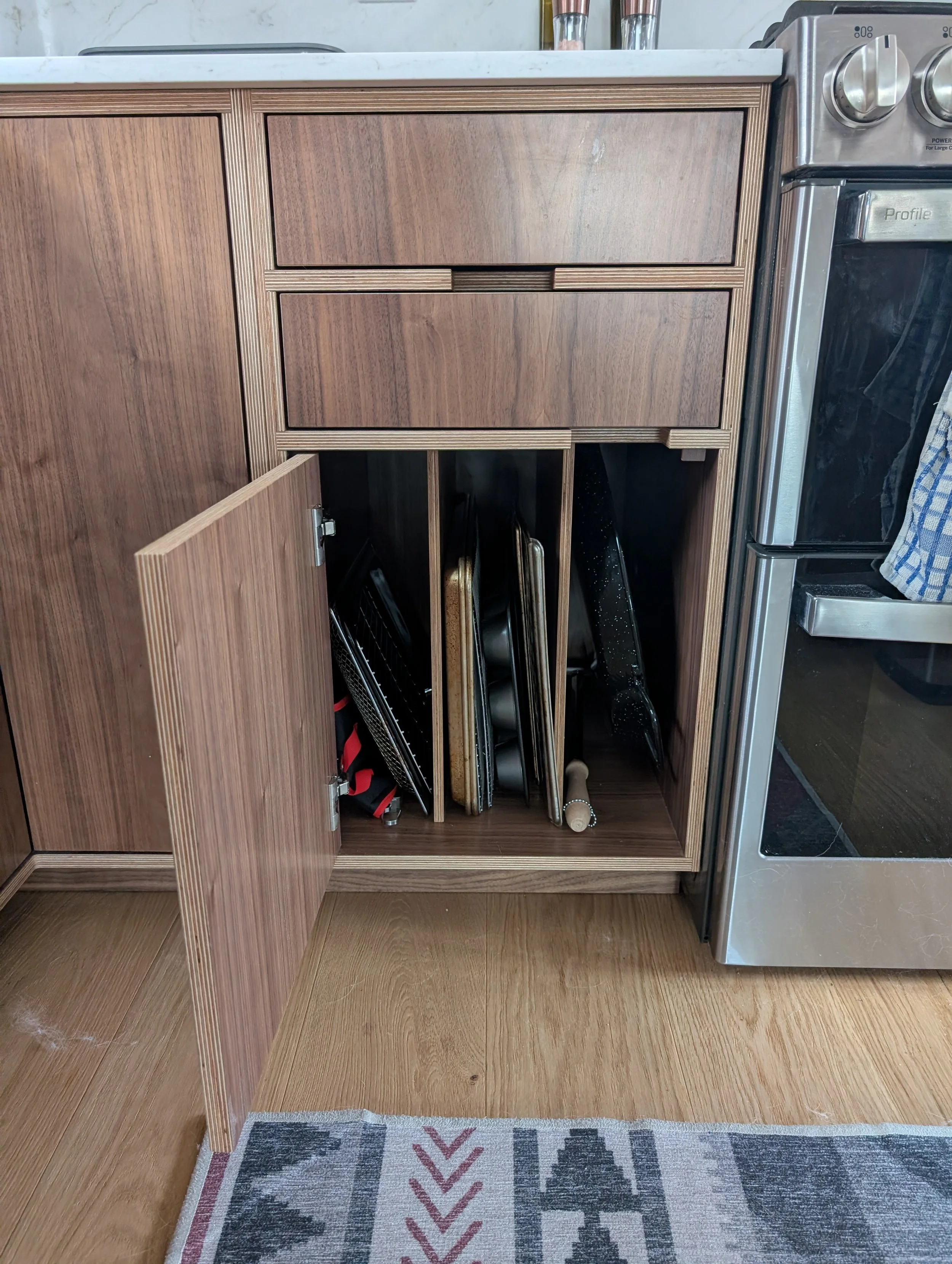
AFTER: Sheet pan cabinet with extra drawer above
3. Designing for Flexibility (Not Just Perfection)
Instead of locking ourselves into overly specific systems, we kept some flexibility built in:
Only two drawers have built-in organizers (spices + utensils)
Other drawers are left open to evolve over time
The spice drawer includes space for oversized containers
A utensil drawer was sized to fit a favorite organizer we already use
A well-organized kitchen isn’t just efficient—it’s adaptable.
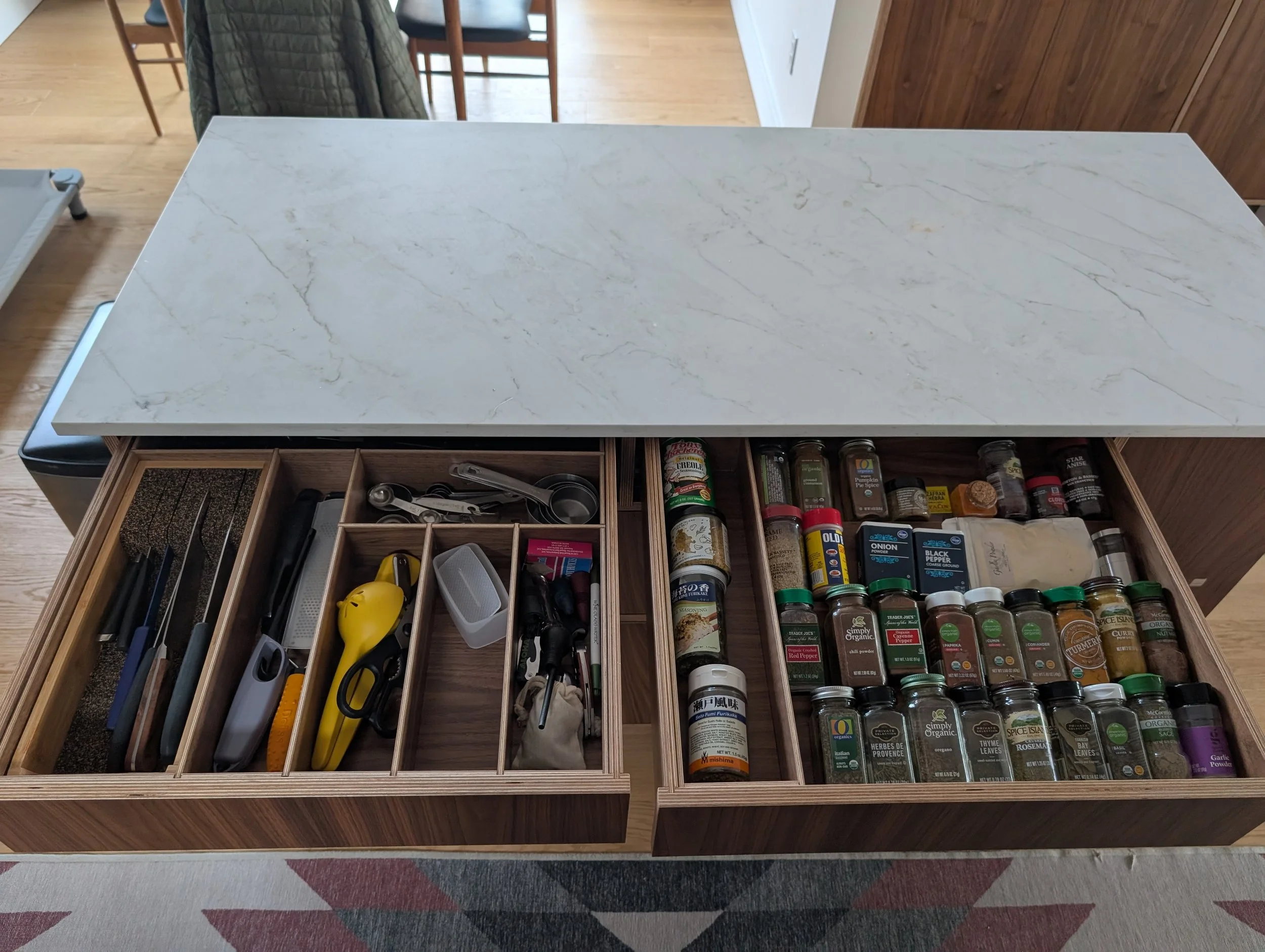
AFTER: Spice and utensil drawers
4. Creating Multi-Use Storage for the Future
One of my favorite features is a dedicated space for our dog’s food and supplies.
But instead of making it overly specific, we used adjustable pull-outs so the space can easily change in the future.
Whether that’s for us or a future homeowner, the system isn’t locked into one use.
Because life changes—and your storage should be able to change with it.
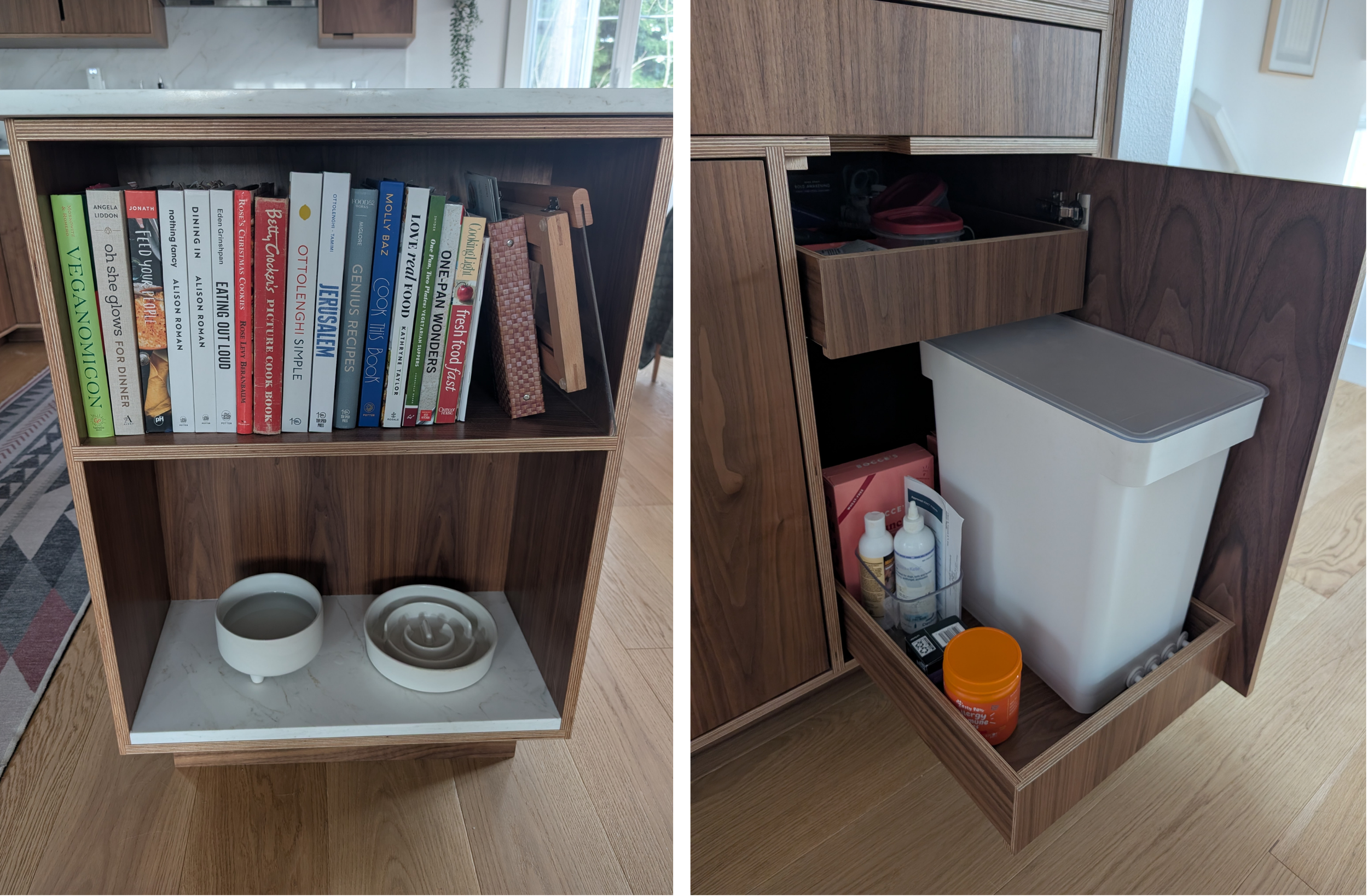
AFTER: Dog feeding station in the island + dog food cabinet in our pantry area
5. Upgrading Function Over Convention
We finally said goodbye to our over-the-range microwave!
The vent was so ineffective that cooking meant opening windows and fanning the smoke detector (not ideal).
We replaced it with a proper hood vent and moved the microwave to a pantry nook.
It’s a small shift that made a huge difference in how our kitchen functions.
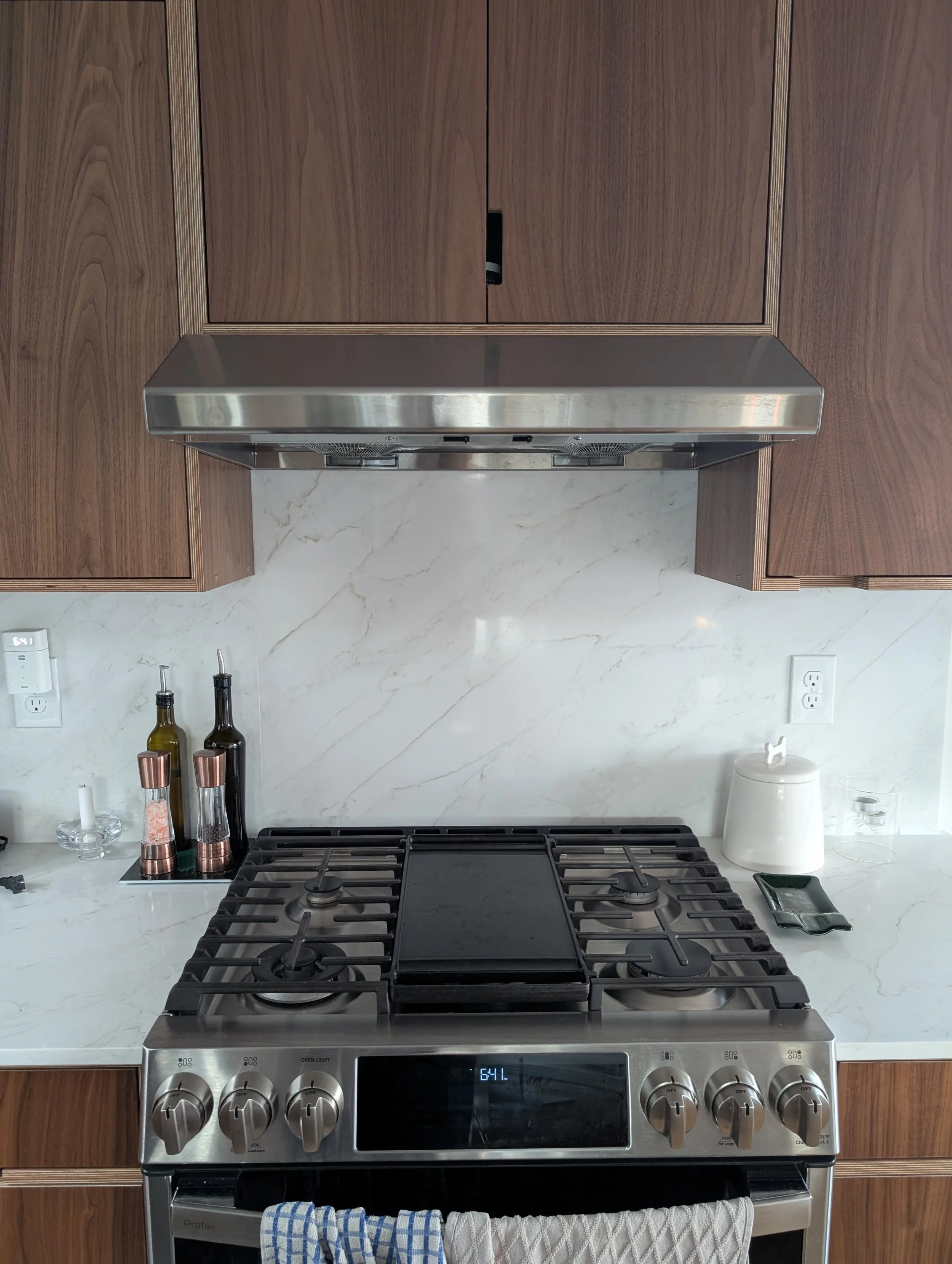
AFTER: Range Hood
What I’d Do Differently Next Time
Not everything is perfect—and that’s part of the process.
If I could change one thing, it would be this:
I’d make the microwave/toaster oven nook smaller.
We followed manufacturer spacing recommendations, but in real life, it’s more space than we needed.
That extra room could have been used for another row of drawers.
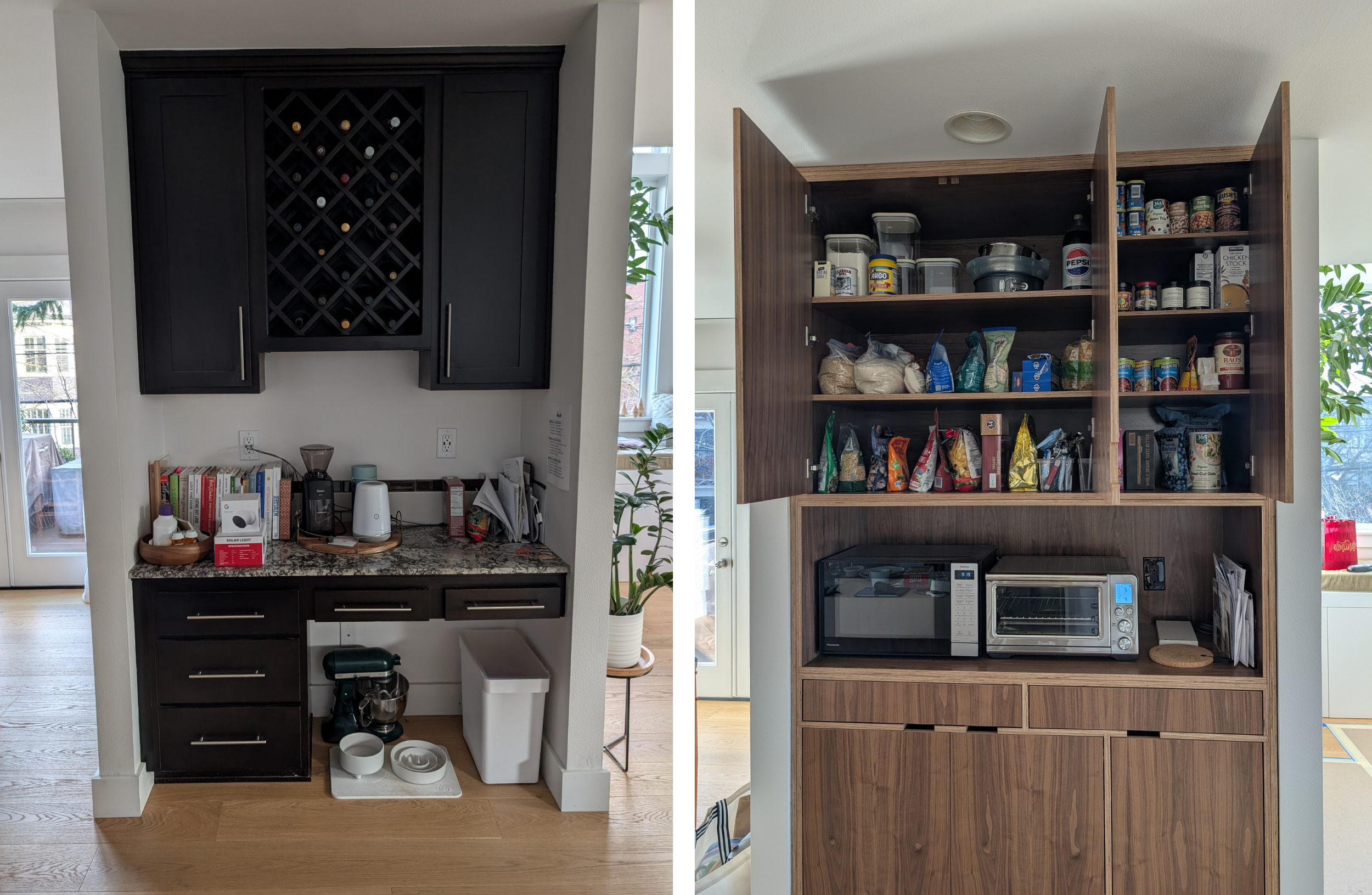
BEFORE and AFTER of built-in pantry with appliance nook
The Biggest Kitchen Design Lesson
A well-designed kitchen isn’t about getting everything exactly right the first time.
It’s about:
Paying attention to how you actually use your space
Questioning default layouts
Making small adjustments that add up over time
Because those are the details that turn a kitchen from something that looks good…
into something that feels easy to live in.
Final Thoughts
If you’re planning a kitchen remodel—or even just reworking your current space—start small.
Look at what you use. Notice what’s frustrating. Question what’s “standard.”
That’s where the best improvements come from.
And now I’d love to hear from you:
What’s one small tweak in your home that made a surprisingly big impact?
Want more tips like this?
Sign up for my newsletter where I share real-life organizing projects, gentle mindset shifts, and tools I swear by.
