How a Professional Organizer Designed a Modern Nursery in Seattle (Without Going Overboard) Part 2
If you've been following along, you know this room has been a long time coming. My old third-floor office — sunny, beloved, and very much mine — is now a nursery. And figuring out how to do that thoughtfully, without drowning in baby gear or blowing the budget, turned out to be one of the most interesting design and organizing challenges I've tackled.
This is Part 2 of the series. Part 1 covers the brain dump and inspiration phase if you want to start there.
Here's a quick look at what we were working with before:
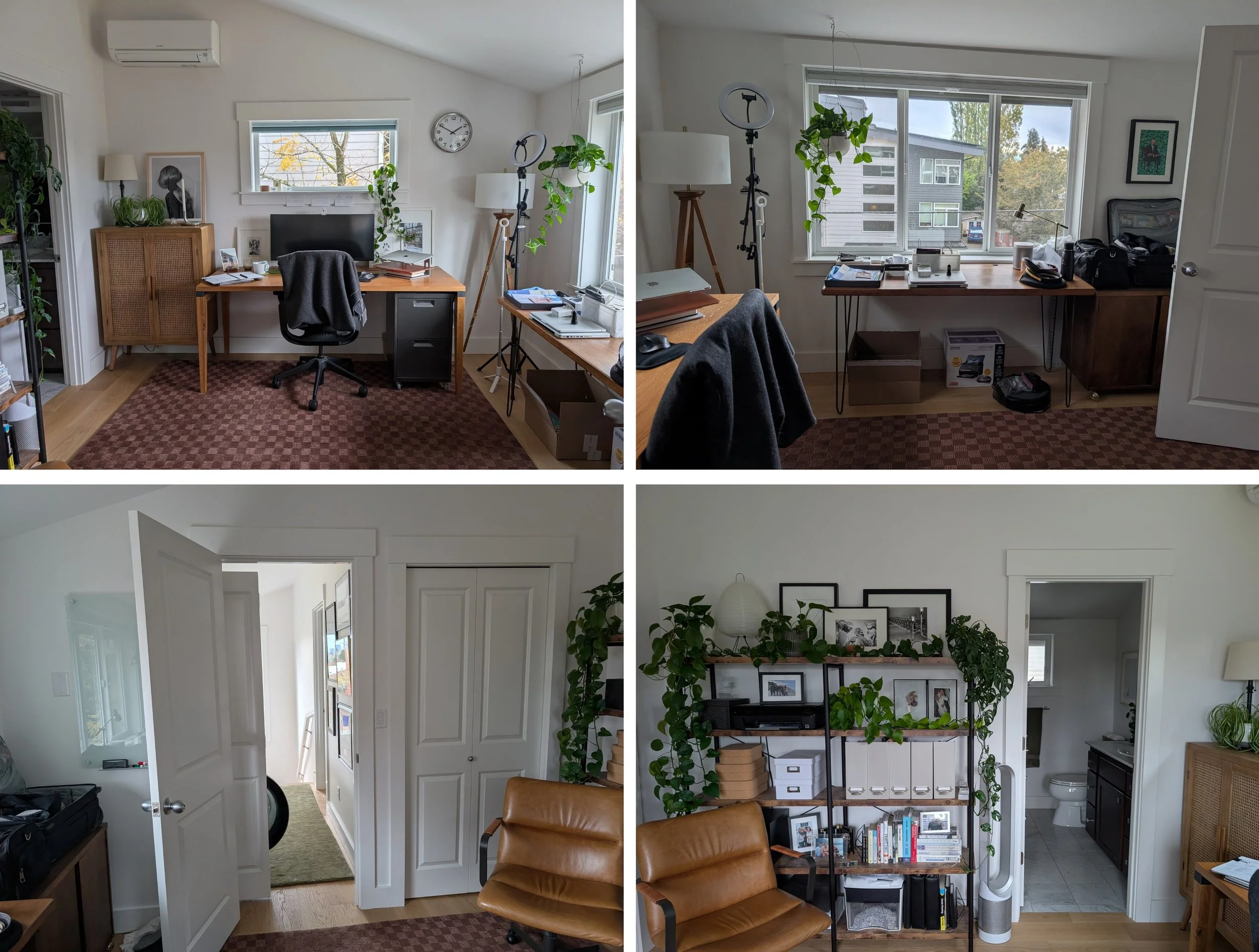
BEFORE: How this room was setup as my office
And where we landed:
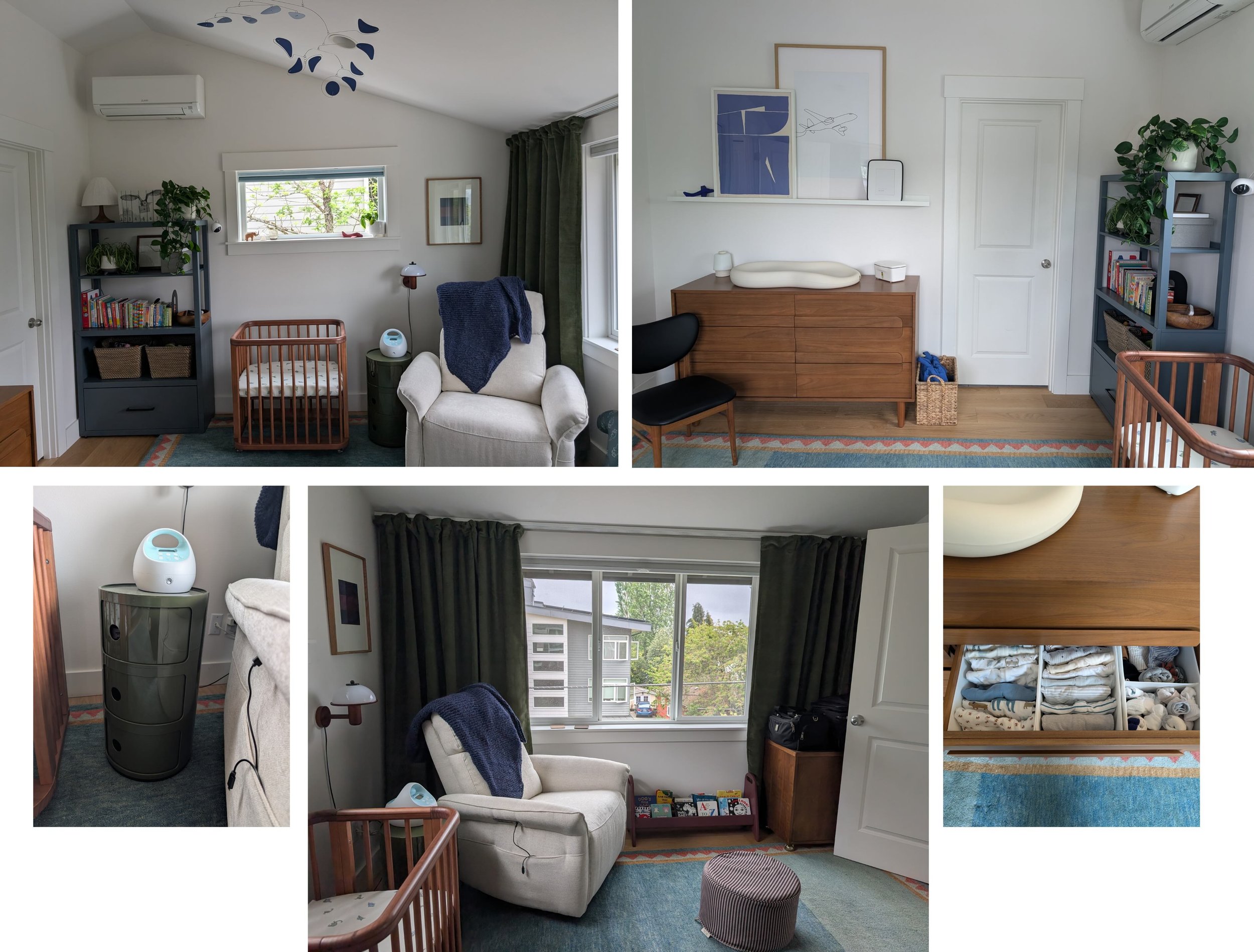
Here's how the whole thing came together!
Start With a Mood Board — Before You Buy Anything
Once I had my Pinterest inspiration narrowed down to a direction I actually believed in, I moved the shortlist into Milanote so I could see product links alongside the images in one place. Does this lamp work next to that dresser? Does this rug fight with those curtains? Having everything visible together helped me make faster, more confident decisions — and saved me from ordering things that looked great in isolation but wouldn't have worked together.
Starting early also meant I wasn't rushed. A few pieces had longer lead times, and being relaxed about that instead of panicking made the whole process easier.
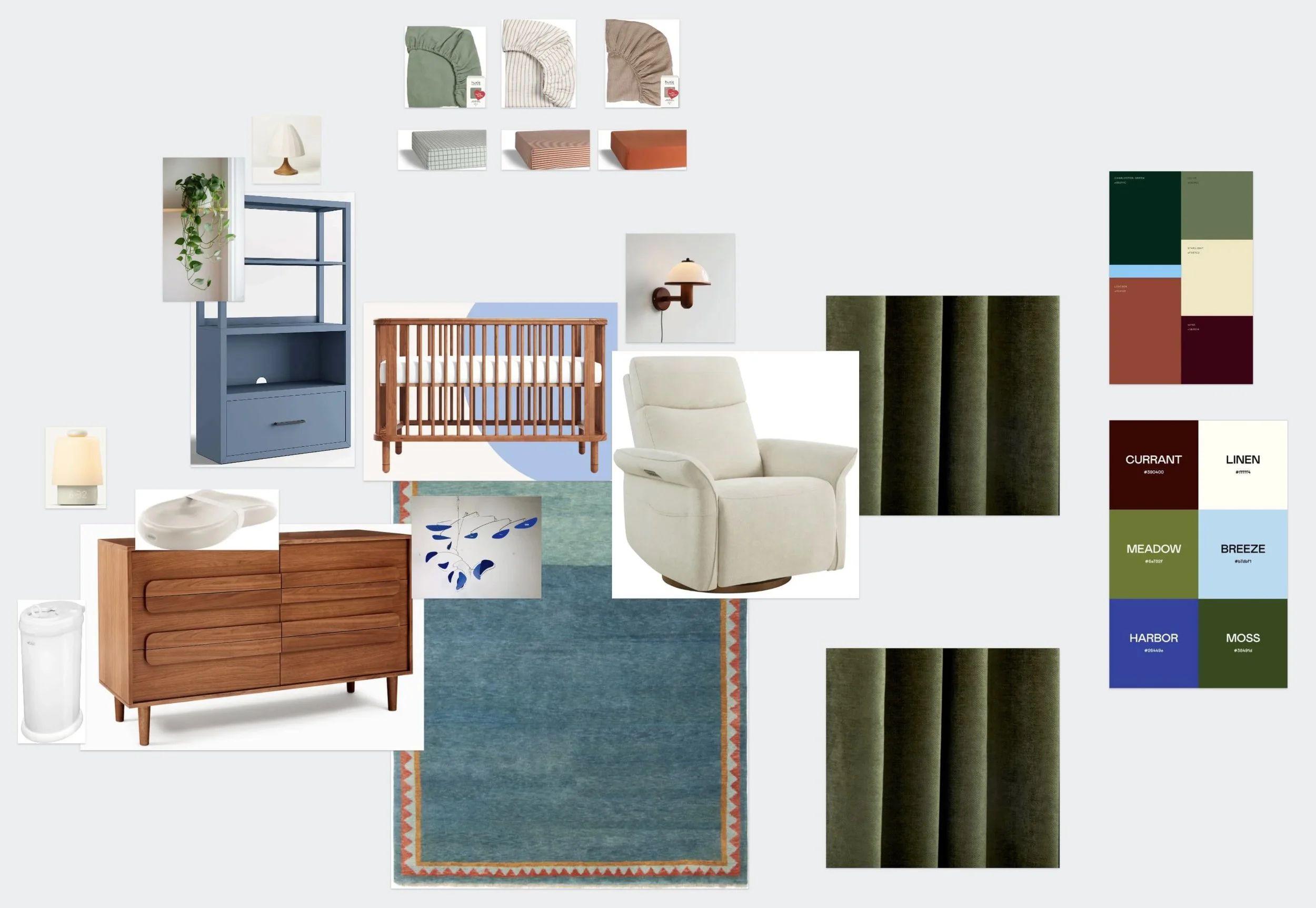
Etsy Is Underrated for Nursery Design
I'd always known it existed. This project made me a convert. Most of the art prints in this room came from small Etsy shops — playful, specific, colorful without being overtly baby-themed — at prices that genuinely surprised me. Custom sizing is often available too, which matters when you're working with a specific wall or a layered frame arrangement.
If you want a modern nursery that doesn't look like every other nursery on the internet, Etsy is worth a serious look before you default to the big box options.
Choose Furniture That Does More Than One Job
We went with a convertible crib that starts as a bassinet, grows into a standard crib, and eventually converts to a toddler bed. One piece of furniture for several years of his life. In a Seattle townhouse where square footage is real and storage is always a negotiation, that kind of versatility matters.
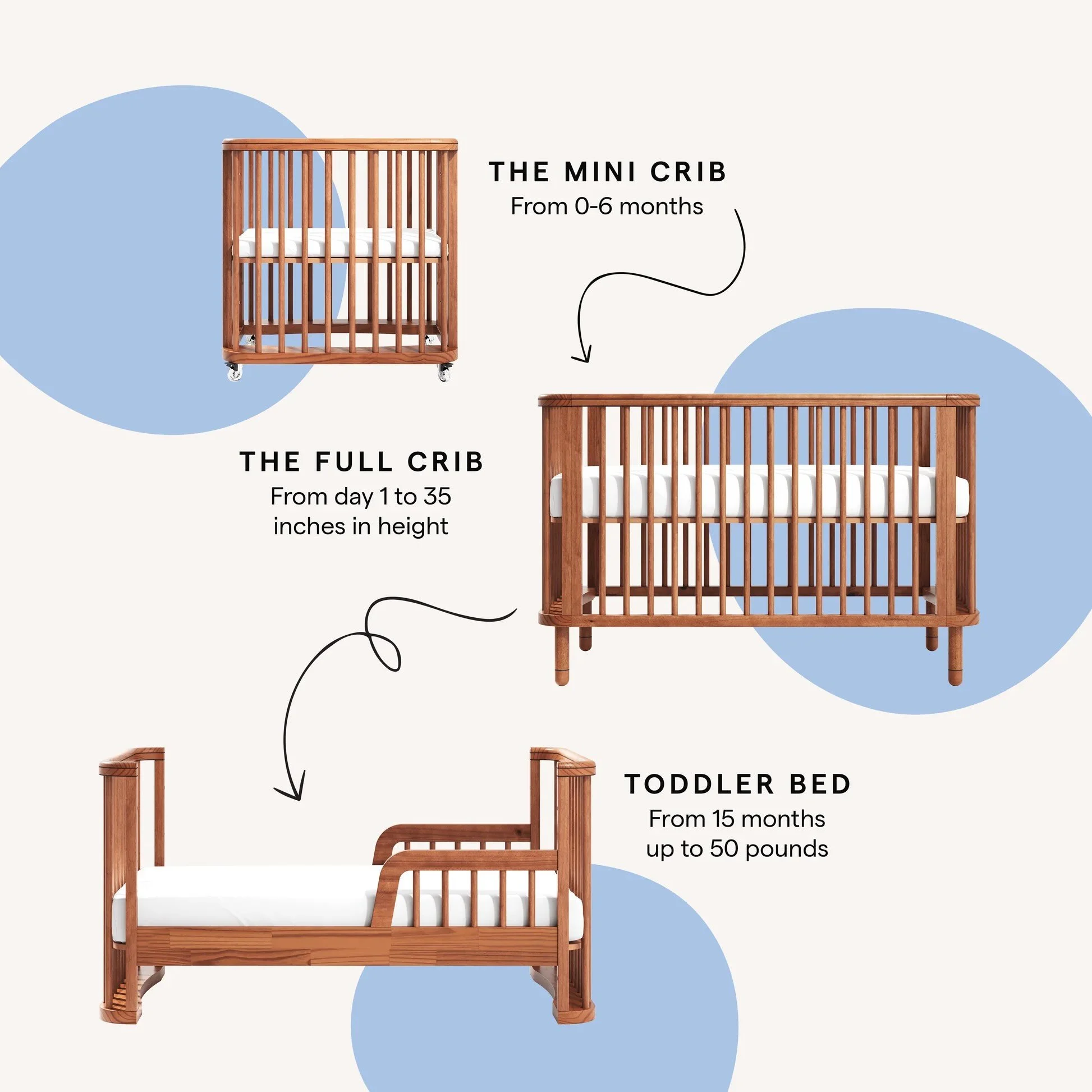
The same thinking applied to the dresser — it doubles as a changing table. The bookshelf our friend built is low enough to be accessible as he gets older. Every piece was chosen with the next phase in mind, not just the newborn one.
Sit-Test Your Nursing Chair. Seriously.
I did not expect to have strong opinions about nursing chairs. After sitting in about a dozen of them across multiple Seattle stores, I very much do. We fell hard for one from Pottery Barn, looked at the price tag, and then I went home and found a near-identical version online for half the cost. Same look, same feel, fraction of the price.
Facebook Marketplace also had some great secondhand options we were seriously considering — always worth checking before buying new, especially for something that gets heavy use in the early months and then often just becomes a reading chair.
Ditch the Overhead Light
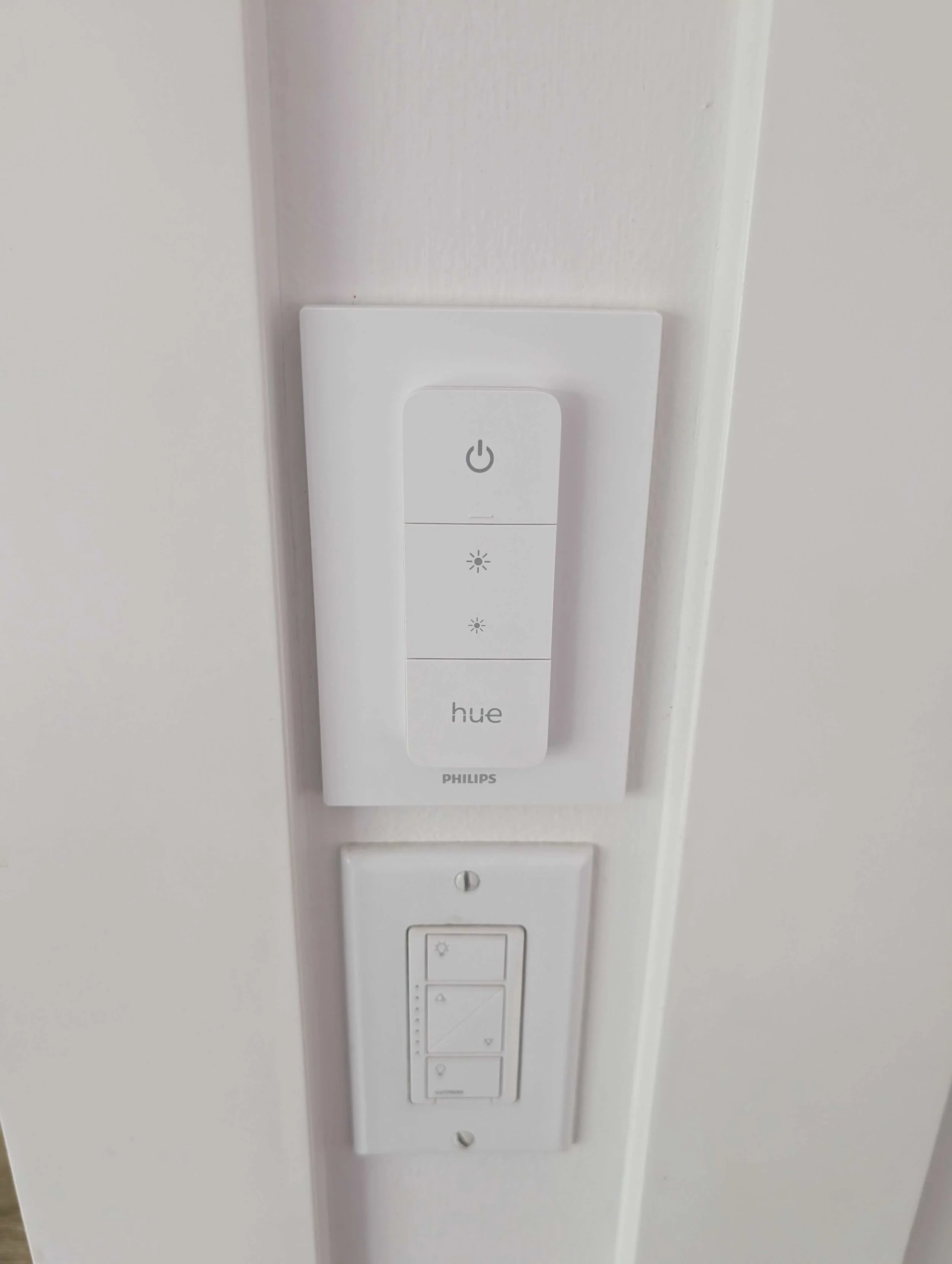
Overhead lighting in a nursery at 3am is brutal. Instead of relying on a ceiling fixture, I added three soft lamp sources around the room and put smart bulbs or smart switches on all of them. I tied everything to a Philips Hue switch mounted near our existing light switches so it looks like it belongs there — because it does.
Pull the switch off its magnetic base, though, and it works as a remote from the chair. Middle-of-the-night feeding, lamps on, nobody's eyes are destroyed. This was one of the better decisions in the room.
The Mobile Is the Star of the Room
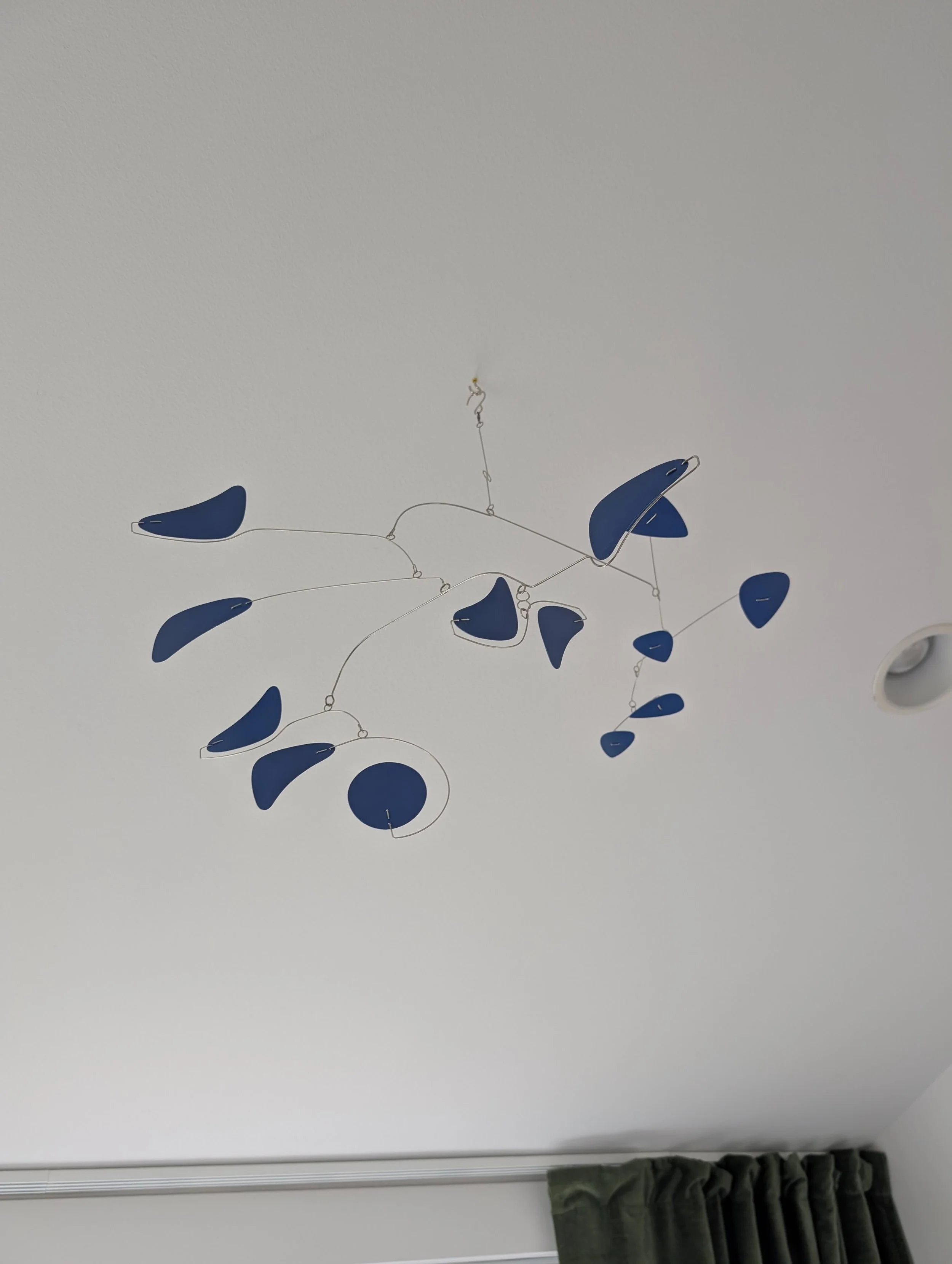
I found it on Etsy, and it's the thing I'm most excited about in this space. It's a nod to Alexander Calder's kinetic sculptures — handmade, in cobalt blue, hanging from the center of the ceiling in place of a pendant light. I basically built the color story of the room around it once I found it. If you're designing a modern nursery and want one standout piece that earns its place, a well-chosen mobile does more than any light fixture could.
The Small Projects That Made a Big Difference
Good nursery organization isn't just about the big furniture decisions. A lot of what made this room work came down to smaller problem-solving moments:
Trimming the rug fringe. Phoebe, our golden retriever, eats rug fringe. That's just the life we live now. A quick trim and the problem was solved. 🐾
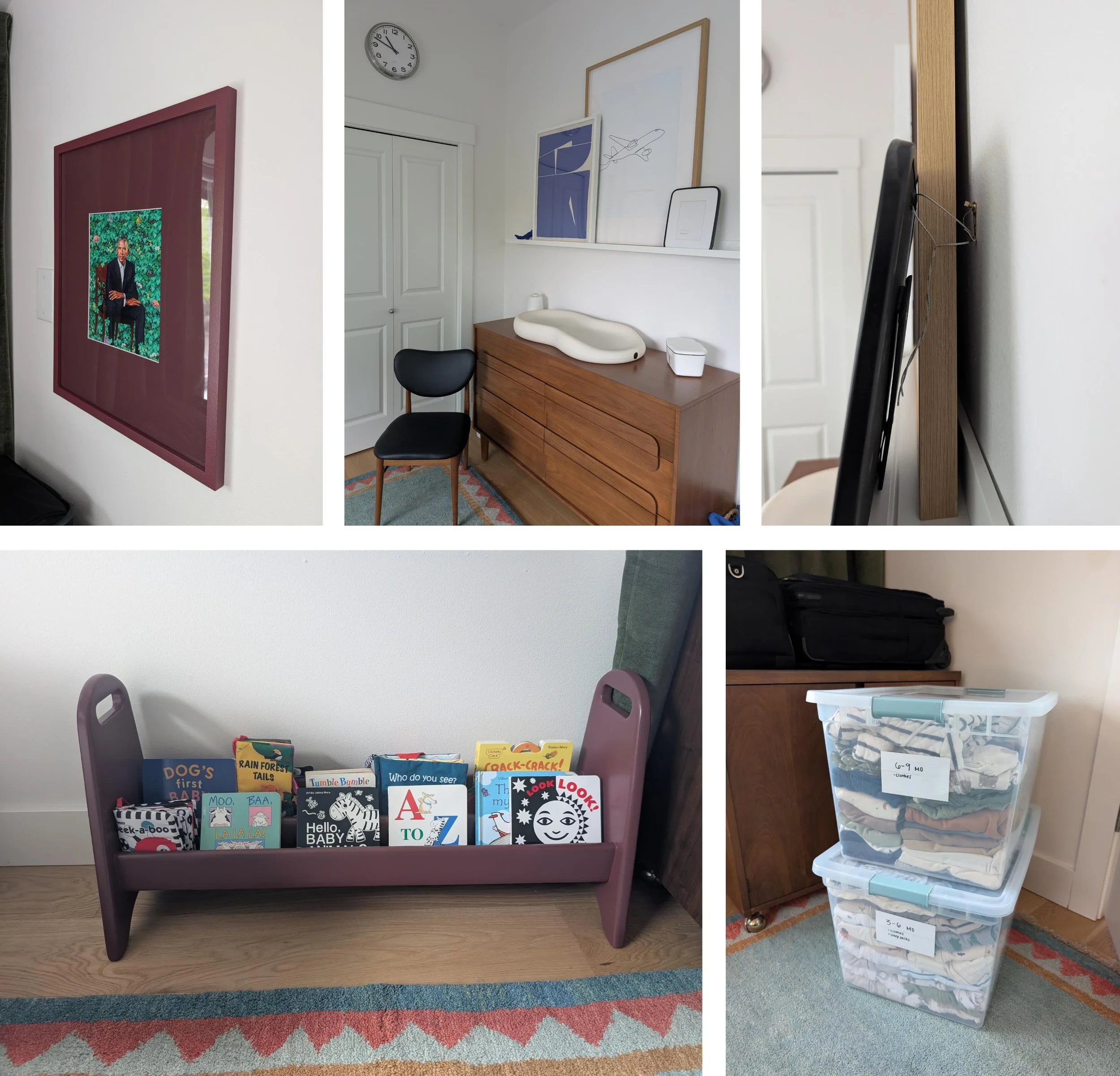
Painting a frame I already owned. I wanted a monochrome layered art look for some of the wall art, which meant I needed frames in a specific burgundy/wine tone. Instead of buying new ones, I painted a frame I already had to match the mat color. All it took was a small paint sample — same frame, completely different vibe.
The curtain track hack. My window trim goes all the way to the ceiling, which means drilling curtain rod brackets wasn't an option. I installed an IKEA curtain track above the windows instead — no holes in the trim, clean look. I had green velvet blackout drapes from the old guest room but needed one extra panel. It came with rod loops, which don't work for a track setup, so I used iron-on fabric tape to attach curtain tape and clipped it onto the track with the rest. Done.
Anchoring the layered frames. I really wanted a layered, leaning-art look above the dresser/changing table, but not the tipping hazard that comes with it. I used earthquake-rated picture hooks with a full-closure loop, then ran picture wire from the wall hook tight to where each frame hook landed. The frames lean slightly away from the wall in that styled, staggered way — but they're actually anchored. I'm unreasonably proud of this one.
The clothing storage system. The dresser holds newborn and 0-3 month items plus changing supplies. Each subsequent size range has its own labeled 66-qt bin in the garage. When he grows out of a size, we return-to-friends or regift those clothes and rotate in the next bin. No cramming six sizes into one dresser. No chaos later.
The book rotation. Our friend built a perfect low bookshelf for a rotating selection of current books. Overflow lives in a taller shelf, with older-age books on our living room bookshelf. The idea is to keep a selection out at one time and swap things in to keep us all interested.
The Bigger Takeaway
Nursery design — like any room design — gets easier when you're clear on what the space actually needs to do, and disciplined about everything else. The Baby Internet will tell you that you need approximately 4,000 things. You don't.
Start with function. Add personality. Source creatively — Etsy, secondhand, what you already own. And give yourself time to let the room come together rather than trying to solve every phase of childhood all at once.
The room is ready. He's almost here (currently 6 days overdue). And I already love spending time in here!
Want to be the first to see the reveal and hear more tips like this?
Sign up for my newsletter where I share real-life organizing projects, gentle mindset shifts, and tools I swear by.
Based in Seattle and thinking about a room refresh of your own? I'd love to help. See how we can work together or get in touch here.
About Kari - Kari is a certified KonMari consultant and professional organizer based in Seattle, WA. Through Refine Organizing, she helps people create homes that feel lighter, calmer, and more aligned with how they actually live.
