What Does "Being Organized" Really Mean? (And How to Figure It Out for Yourself)
If you've ever said, "I just want to be more organized," but weren’t quite sure what that would actually look like for you — you’re not alone.
As a Seattle-based professional organizer and certified KonMari Consultant, it's one of the most common things I hear from clients. The desire to be more organized is strong, but the vision? Often fuzzy.
Without clarity on what "organized" means in the context of your life, it's tough to know where to start. And it's even tougher to envision the kind of support that might actually help.
Organization Isn't a Moral Imperative
Here’s something that might shift your perspective:
Being organized isn’t a virtue or a moral obligation. It’s not a box to check off because you "should." It’s simply a means to an end.
The value of an organized space lies in how well it supports the kind of life you want to live — one with more ease, more clarity, and more freedom to focus on what truly matters to you.
As author Annie Dillard put it:
“How we spend our days is, of course, how we spend our lives.”
If your space is making your days feel heavy, scattered, or frustrating, that’s a signal worth listening to.
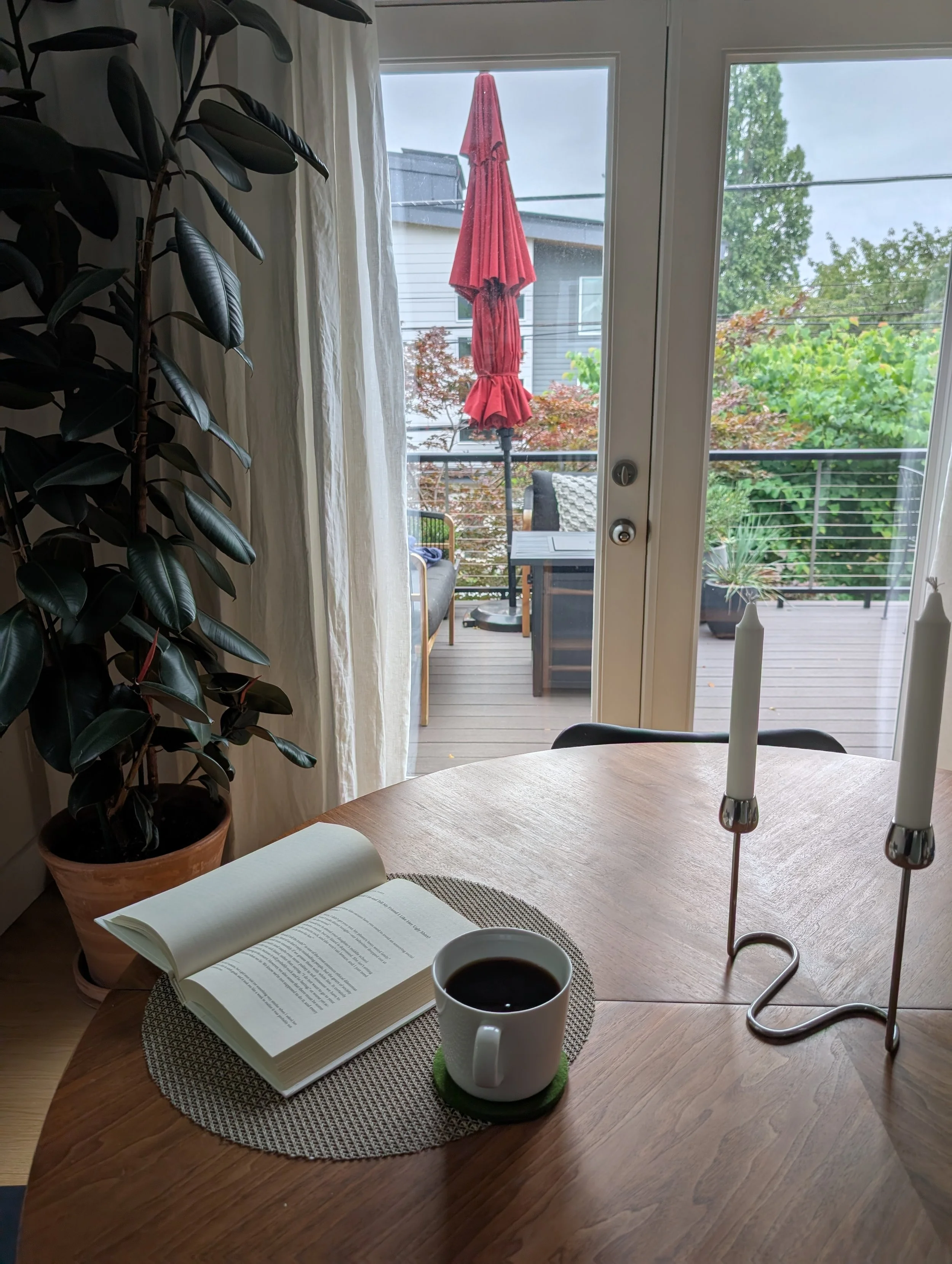
My slow morning happy place.
What Does "Organized" Look Like for You?
That vague feeling of "something's off" in your home or workspace? It's real. And articulating what’s not working (and what you'd love instead) can be incredibly clarifying.
You don’t need a perfect plan. But a little reflection can go a long way.
Here’s a simple 3-part clarity-building exercise to help you start:
1. Envision Your Ideal Space
How do you feel when you’re in it?
What do you see — or not see?
Are there specific sounds, scents, or aesthetics?
What kind of energy or vibe does it give you?
2. Reflect on Your Current Space
What’s working: layout, functionality, lighting, storage?
What’s not?
Is it visually noisy?
Is it hard to put things away, so clutter accumulates?
Are there areas you avoid because they hold emotional weight?
Is the design no longer "you"?
Is it hard to ask for help because no one else knows the "system"?
3. Identify Must-Haves + Constraints
“I need storage for ___.”
“I have a budget of $___.”
“I’m renting, so no structural changes.”
“This space needs to accommodate kids/pets/remote work.”
Even if the list feels long or overwhelming, it's a powerful starting point. Naming what feels off gives shape to your vision — and from there, progress becomes possible.
You're Not Behind. You're Just Becoming.
You’re not doing it wrong. You’re just in the middle of figuring out what "organized" actually looks and feels like for you.
If a more organized home would help you feel calmer, more confident, or more present in your day-to-day life, that’s absolutely worth pursuing.
No shame. No pressure. Just a gentle, judgment-free invitation to move toward something that feels better.
Looking for Guided DIY Support?
If you're ready to tackle your home projects on your own but want a little expert guidance, I'm working on a new service just for you.
This offering will include a customized plan, supportive check-ins, and an accountability partner to help you stay on track without feeling overwhelmed.
If that sounds like something you'd love, contact me here and let me know what kind of support you’d find most helpful. I'm building this to meet real needs, not one-size-fits-all formulas!
Kari Lonczak
Professional Organizer | Certified KonMari Consultant
Seattle, WA
Want more tips like this, plus behind-the-scenes looks at how I organize real homes (and real lives)?
Sign up for my newsletter right here and get practical inspiration delivered to your inbox.
